
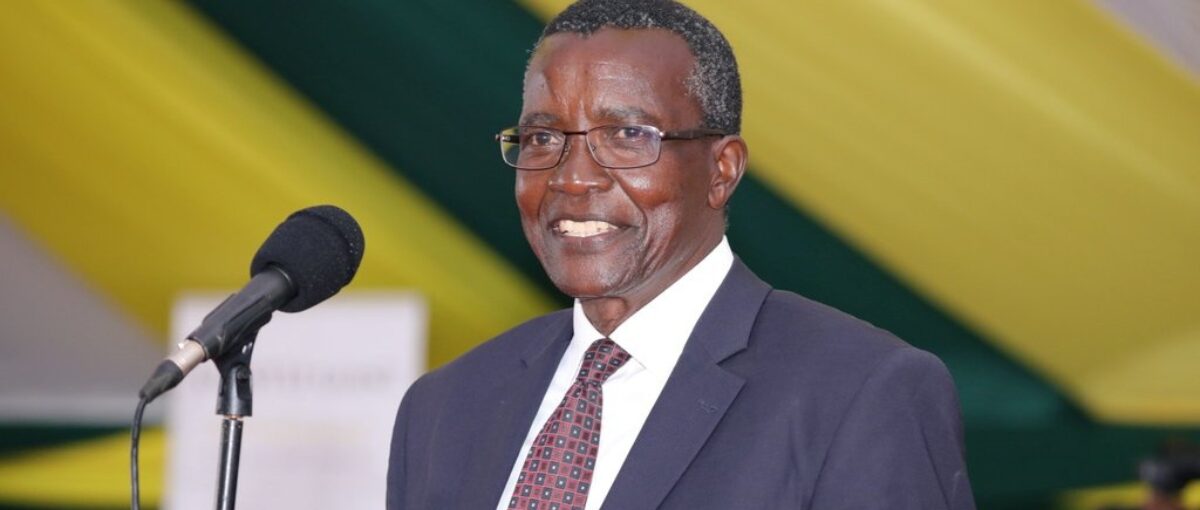
Kenya’s electoral system should be designed around one fundamental principle: the vote belongs to the voter, and every stage of the electoral process must be transparent, verifiable and protected from manipulation.
It is against this principle that the Atheists In Kenya Society (AIK) supports the demand by former Chief Justice David Maraga and the People’s Coalition on Electoral Reforms for the scrapping of the national presidential tallying centre at Bomas of Kenya ahead of the 2027 General Election.
On September 15, 2026, Maraga called for there to be no national tallying centre at Bomas—or anywhere else—arguing that the Constitution provides for counting, tallying, verification and announcement of results at polling stations, followed by collation at constituency level.
For AIK, this proposal deserves serious national debate.
The Polling Station Must Remain Central
- The integrity of an election begins at the polling station.
- That is where citizens cast their ballots.
- That is where votes are counted in the presence of agents and observers.
- That is where results are recorded and announced.
The Maina Kiai litigation has been central to Kenya’s jurisprudence on the finality of results declared at polling stations. Maraga’s coalition argues that once results have been properly declared at that level, they should not subsequently be altered through a national retallying process.
AIK believes this principle deserves protection.
The further electoral results move away from the place where citizens actually cast and count their votes, the more important transparency and safeguards become.
Why Have a National Tallying Centre?
This is the fundamental question Kenyans should ask. If presidential results have already been counted, verified and declared at polling stations and subsequently collated at constituency level, what additional function should a national tallying centre perform?
The Maraga-led coalition argues that the Constitution does not establish a national tallying centre and that the IEBC chairperson’s constitutional role is to declare the presidential result rather than conduct a fresh tally or alter results already declared at lower levels.
This interpretation is contested.
Health Cabinet Secretary Aden Duale has argued that the Constitution must be read together with the Elections Act, pointing to provisions dealing with presidential results transmitted to constituency and national tallying centres. He maintains that national-level tallying and verification have a legal basis.
That disagreement is precisely why Kenya needs a serious constitutional and legal debate before 2027—not arguments after millions of Kenyans have already voted.
Bomas Has Become a Symbol of Electoral Disputes
Kenya’s recent electoral history has demonstrated how contentious presidential tallying can become.
The national tallying process has repeatedly attracted intense political attention, competing claims and disputes.
The Maraga-led coalition argues that the national tallying centre has contributed to opacity and division, while proponents of the existing system argue that a national facility provides a mechanism for aggregating results from across the country.
AIK’s position is that the solution should not simply be to defend an established practice because it has always been used.
If there is a better constitutional mechanism for protecting the integrity of presidential results, Kenya should be prepared to consider it.
Decentralise the Process
AIK supports greater decentralisation of electoral results management.
Under the proposal advanced by Maraga’s coalition, presidential results would be conclusively managed at polling-station and constituency levels, with the national IEBC leadership receiving the constituency results and declaring the final presidential outcome without conducting a fresh national tally.
Such a system would place greater responsibility on constituency returning officers and make the chain of results easier for citizens, candidates and observers to follow.
It would also reinforce the idea that the national result is an aggregation of results already generated by voters at thousands of individual polling stations, rather than a new result created at a central venue.
But Scrapping Bomas Is Not Enough
AIK does not believe that simply closing Bomas would automatically produce credible elections.
The entire electoral chain must be strengthened.
Kenya needs:
- Transparent counting at every polling station.
- Properly completed and publicly accessible election forms.
- Effective party-agent participation.
- Reliable electoral technology.
- Secure transmission of results.
- Independent election observation.
- Prompt publication of polling-station and constituency results.
- Strong safeguards against interference.
- Clear procedures for resolving discrepancies.
- Effective judicial oversight.
- An independently functioning IEBC.
Indeed, current reform discussions include questions about electoral technology, transmission and public access to results. A proposed 2026 amendment bill has also generated debate over the future of livestreaming polling-station results.
Transparency must therefore exist from the polling station to the final declaration.
The Public Must Be Able to Verify the Result
Democracy is not merely about voting. It is about being able to demonstrate that the votes were counted accurately. Every Kenyan should be able to understand how the final presidential result was produced.
If Candidate A receives a particular number of votes at a polling station, those votes should be traceable through the constituency aggregation and ultimately into the national declaration.
There should be no mysterious mathematical leap between what happened at the polling station and what is eventually announced nationally.
The chain should be clear. The records should be accessible. The mathematics should be verifiable. That is how public confidence is built.
AIK Supports Evidence-Based Electoral Reform
Atheists In Kenya Society is not a political party.
Our interest in this debate comes from our commitment to secularism, constitutionalism, democracy, freedom of thought and accountable public institutions.
We believe Kenyans should be able to question electoral systems without being accused of disloyalty or political conspiracy.
The debate over Bomas should therefore not be reduced to whether one political faction supports or opposes the proposal.
The question should be:
Which electoral architecture provides the greatest constitutional clarity, transparency, verifiability and protection of the voter’s choice?
That question deserves evidence, legal analysis and public participation.
2027 Must Be About the Voter
Kenya cannot afford another electoral process in which citizens are left wondering whether the numbers announced at the end accurately represent the votes cast at the beginning.
- The voter should be at the centre.
- The polling station should be protected.
- The results should be traceable.
- The IEBC should be transparent.
And every official involved in the process should understand that electoral power belongs to the Kenyan people—not to politicians, institutions or individuals.
AIK therefore supports the call for a national conversation on whether Bomas should continue serving as Kenya’s national presidential tallying centre.
If the constitutional architecture can be strengthened by eliminating a central tallying stage and making constituency-level results the basis for the final declaration, that option should be seriously examined.
Kenya should not wait for another disputed election to ask whether its electoral system could have been designed better.
The time to fix the electoral architecture is before the election—not after the results are disputed.