

CThe appointment of Hassan Omar Daffa as Kenya’s new Chief Kadhi by the Judicial Service Commission (JSC) on 13 November 2026 has once again brought an important Constitutional question into public discussion: Why does Kenya, a country whose Constitution declares that there shall be no State religion, maintain religious courts within its judicial system?
The Atheists In Kenya Society (AIK) believes that the inclusion of Kadhis’ Courts in the Constitution of Kenya, 2010 was a constitutional mistake that deserves serious reconsideration.
Our position is straightforward: Religious freedom must be protected, but religious institutions should not be embedded in the constitutional structure of the state.
1. The appointment of a new Chief Kadhi
On 13 November 2026, the Judicial Service Commission announced the appointment of Hassan Omar Daffa as Kenya’s new Chief Kadhi, filling the position left vacant following the death of his predecessor, Sheikh Abdul Halim Hussein.
Daffa previously served as a Principal Kadhi. He holds academic qualifications in Islamic jurisprudence and Sharia, as well as a Bachelor of Laws degree from Mount Kenya University. He is also an Advocate of the High Court of Kenya. His appointment followed a recruitment process that attracted 14 applicants, nine of whom were shortlisted for interviews.
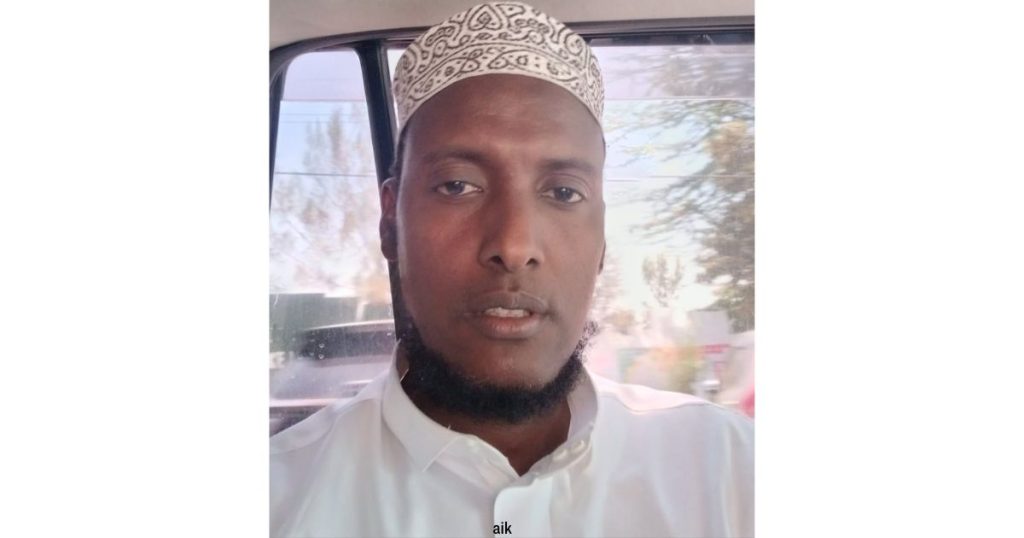
AIK recognises that the appointment was conducted within the existing Constitutional and legal framework. However, the appointment also reminds us that Kenya has institutionalised a religious judicial office through its Constitution. Our disagreement is not with Hassan Omar Daffa as an individual. It is with the Constitutional establishment of an office whose qualification requirements are explicitly tied to religious identity.
Why should the State Constitutionally maintain a judicial office that can only be occupied by someone who professes a particular religion? This is a legitimate question that Kenyans should be able to discuss openly.
2. Article 8: Kenya shall have no State religion
Article 8 of the Constitution of Kenya, 2010 states:
This provision is important because Kenya is a religiously diverse society. It recognises the need for the state to remain institutionally neutral in matters of religion.
Kenya is home to Christians, Muslims, Hindus, traditional believers, atheists, agnostics, humanists and people who subscribe to no religious belief. The State belongs to all these citizens equally.
In the view of AIK, the principle of having no State religion should be accompanied by a clear separation between religious institutions and the institutions of government. The Government should neither establish nor privilege religious judicial institutions.
We must distinguish between protecting the right of Muslims to practise Islam and establishing religious courts as part of the constitutional Judicial structure. Muslims must remain free to practise their religion, conduct religious marriages, seek religious guidance and organise voluntary mechanisms for resolving personal disputes.
However, protecting religious freedom does not necessarily require the state to maintain religious courts within its Judiciary. Freedom of religion is not the same thing as constitutional recognition of religious institutions.
3. Article 170: How Kadhis’ Courts became part of our Constitution
Article 170 of the Constitution establishes the office of the Chief Kadhi and provides for other Kadhis.
It also requires that a person appointed as a Kadhi professes the Muslim religion and possesses the requisite knowledge of Muslim law. Under Article 170(5), the jurisdiction of Kadhis’ Courts is limited to determining questions of Muslim law relating to personal status, marriage, divorce and inheritance.
There are two important conditions: all parties must profess the Muslim religion, and they must submit to the jurisdiction of the Kadhis’ Courts. This means that Kadhis’ Courts do not have unlimited jurisdiction over the Kenyan population.
Nevertheless, the question remains: Why should the Constitution establish a judicial institution whose eligibility requirements and jurisdiction are explicitly based on religious affiliation? Kenya has a National Judiciary that should administer justice under the Constitution and laws of the Republic.
Religious communities should enjoy the freedom to organise their affairs without requiring the state to constitutionally maintain religious judicial institutions.
4. The problem of religious courts in a religiously diverse society
The Constitution is the supreme law of the Republic. It should reflect the collective citizenship of Kenyans rather than institutionalise particular religious traditions.
The existence of Kadhis’ Courts raises important questions about equality, religious neutrality and the Constitutional relationship between the state and religion. Why should one religious tradition have a Constitutionally recognised Judicial structure while other religious and non-religious communities do not have equivalent institutions? Why should religious identity determine eligibility for a particular Judicial Office?
Why should the state maintain religious Courts instead of strengthening a uniform system of civil justice accessible to everyone?
These questions are not an attack on Islam or Muslims. They are questions about the proper role of religion in public institutions.
AIK believes that religious freedom should be enjoyed by individuals and communities without the State becoming an institutional participant in religious administration. A secular state does not prevent people from practising religion. It ensures that public institutions remain independent of religious authority.
5. The constitutional review process: An opportunity to correct this arrangement
Kenya’s Constitution is not beyond amendment. Article 255, Article 256 and Article 257 provide constitutional mechanisms through which amendments can be considered and adopted.
AIK believes that any comprehensive Constitutional review process should include the question of Kadhis’ Courts. We should not treat every provision of the 2010 Constitution as permanently immune from public scrutiny.
The Constitution should remain responsive to changing democratic values, Constitutional principles and the aspirations of future generations.
During the next Constitutional review process, Kenyans should openly debate whether religious Courts belong in the constitutional structure of a modern republic. Our proposed reform is to remove the Constitutional establishment of Kadhis’ Courts and the office of Chief Kadhi, including the relevant provisions in Article 169 and Article 170.
Any consequential amendments to legislation should then be undertaken to ensure that personal status, marriage, divorce and inheritance disputes can be addressed through the ordinary civil justice system.
This reform must not take away the right of Muslims to practise Islam, enter religious marriages or voluntarily seek religious guidance. The objective should be to separate religious administration from state judicial institutions.
6. The way forward: What should Kenya do?
The Atheists In Kenya Society proposes the following:
First: Include Kadhis’ Courts in the National Constitutional reform debate.
The next constitutional review process should provide an opportunity for citizens to discuss whether religious courts should continue to enjoy constitutional recognition.
Second: Promote a genuinely secular Constitutional framework.
Article 8 should be understood alongside the principles of equality, freedom of conscience and institutional religious neutrality.
Third: Strengthen the ordinary civil justice system.
Kenya should invest in accessible, affordable and efficient Courts that administer civil law without making religious affiliation a qualification for access to a particular state judicial institution.
Fourth: Protect religious freedom.
Removing Kadhis’ Courts from the Constitution must not be interpreted as removing Muslims’ freedom to practise Islam. Religious communities must remain free to organise their religious affairs voluntarily, subject to the Constitution and the law.
Fifth: Encourage National Dialogue.
AIK calls upon Constitutional lawyers, human rights organisations, religious leaders, civil society organisations and members of the public to participate in a serious discussion about the future of religious courts in Kenya.
7. Our position as the Atheists In Kenya Society
The Atheists In Kenya Society is committed to promoting secularism, freedom of thought, equality and the protection of the rights of atheists and other non-religious individuals in Kenya.
We believe that the state should not favour, promote or institutionalise any particular religious tradition.
Our position is not that Muslims should stop practising Islam. Neither are we suggesting that religious people should lose their freedom to organise their communities. We are advocating for a constitutional order in which the state remains neutral and the Judiciary serves all Kenyans under one common framework of civil law.
The appointment of a new Chief Kadhi should therefore be an opportunity to revisit a Constitutional question that has not received sufficient National attention. When Kenya next reviews its Constitution, the removal of Kadhis’ Courts from the Constitutional Judicial structure should be firmly placed on the agenda.
Kenya does not need religious Courts to protect religious freedom. It needs an independent Judiciary, equal protection under the law and a Constitutional commitment to freedom of conscience.
The Constitution belongs to all Kenyans. It should not institutionalise religion.