
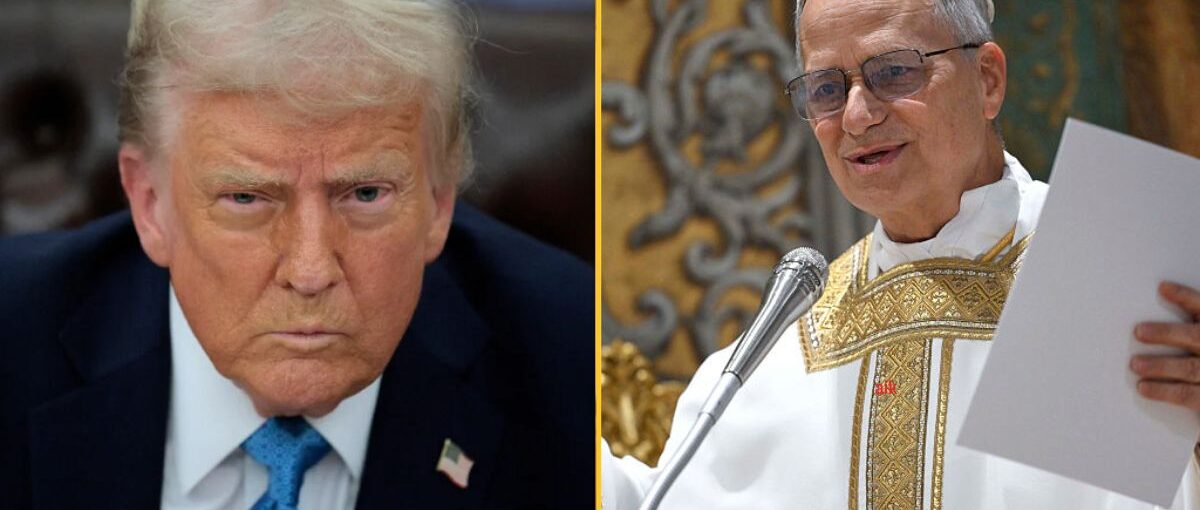
Former U.S. President Donald Trump has publicly criticized Pope Leo XIV after the pope condemned the ongoing conflict in Iran, sparking a broader clash between political authority and religious leadership.
Trump accused the head of the Catholic Church of being weak on crime and overly aligned with liberal interests. In a social media post, he urged the pope to “get his act together,” avoid political engagement, and focus instead on his spiritual responsibilities, warning that his current stance was damaging both his leadership and the Church.
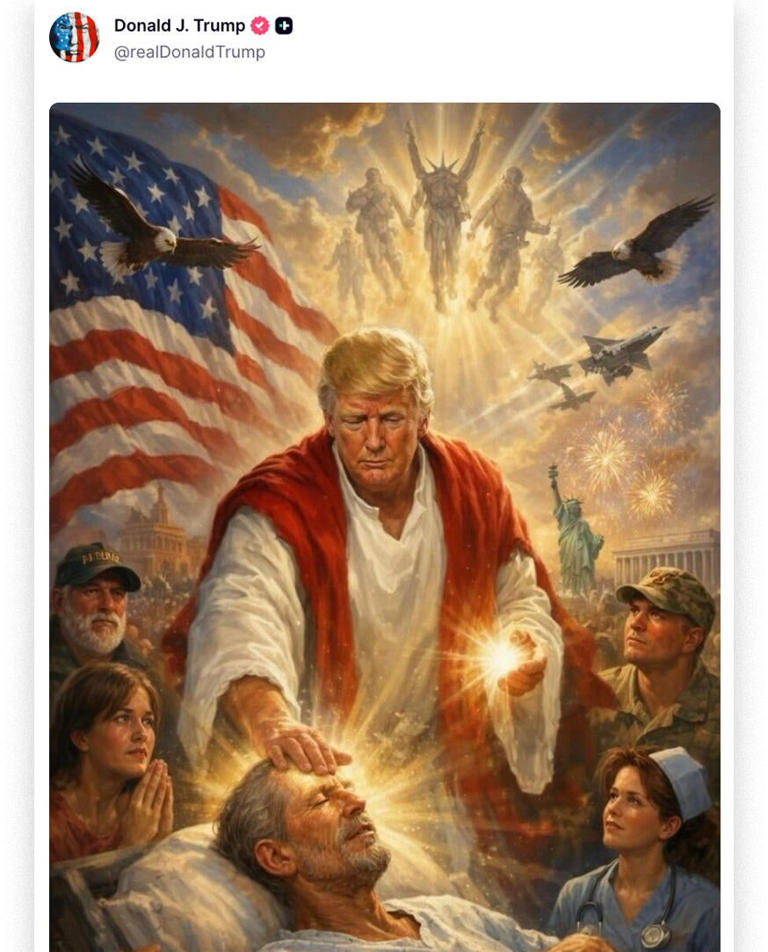
The remarks were accompanied by controversy after Trump shared an AI-generated image of himself in a religious setting, which many interpreted as self-aggrandizing. The image drew criticism from various quarters, including segments of the Christian right, and was later taken down. Trump, however, dismissed the backlash, stating that the image was intended to portray him as a healer rather than a religious figure.
Speaking to reporters, Trump reiterated his dissatisfaction, describing the pope as a liberal voice interfering in political matters. In response, Pope Leo XIV stood firm, affirming his commitment to speaking out against war and promoting peace. He emphasized that he would not be intimidated by political pressure and would continue advocating for reconciliation and nonviolence, in line with the teachings of the gospel.
The pope has recently intensified his criticism of the war, rejecting attempts to justify violence through religious rhetoric and calling for an end to what he described as the glorification of power and conflict. He urged believers to take an active role in pushing for peace and holding political leaders accountable.
This public dispute highlights the ongoing tension between religious influence and political power, particularly when moral positions taken by faith leaders challenge government policy. It also raises questions about the role of religion in shaping public discourse, especially in matters of war, governance, and international relations.